


Palaeomastodon

Name meaning:
Ancient mastodon
Period of life:
33–30 million years ago
Period:
Paleogene period
Habitat:
Marine environment
Taxonomy:
Mammals
Countries:




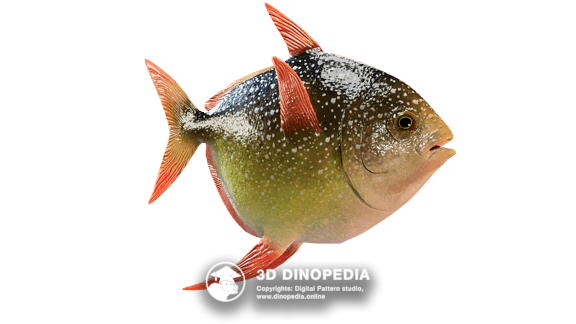 Megalampris


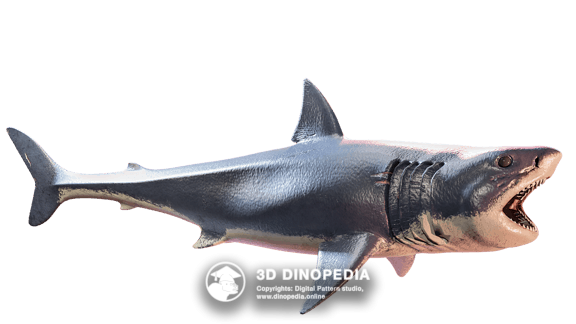
Megalodon


What does the name mean: Palaeomastodon means “ancient mastodon” in Greek. Palaeos means “ancient” or “old,” while mastodon means “breast-tooth” (from Greek mastos — “breast” and odon — “tooth”), referring to the characteristic shape of the molars.
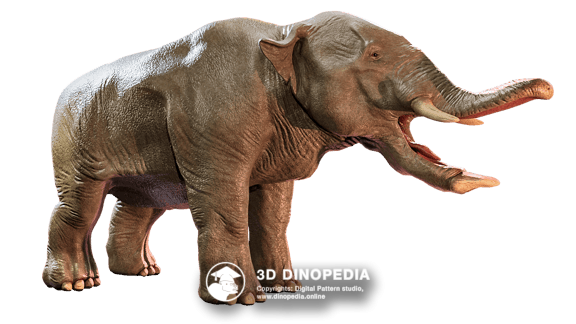
Palaeomastodon beadnelli was an early proboscidean that lived in North Africa during the late Eocene and early Oligocene, approximately 33–30 million years ago. It is considered one of the early relatives of modern elephants and provides important information about the evolution of proboscideans.
Palaeomastodon was a relatively large animal, reaching about 3.5 m in length and approximately 2.2 m in height. Its body was more elongated and lower-slung than that of modern elephants.
A characteristic feature of Palaeomastodon was the presence of four tusks. Unlike modern elephants, it possessed two upper tusks directed downward and two lower tusks curved forward. The lower tusks were flattened and broadened. They were probably used for digging vegetation out of soft soil and stripping bark from trees.
Palaeomastodon possessed a trunk, although it was shorter and less flexible than that of modern elephants. The trunk evolved through the fusion of the nose and upper lip and was used for grasping food and water.
Palaeomastodons were probably herd animals, similar to modern elephants. They inhabited coastal swamp forests and riverbanks. Their diet mainly consisted of aquatic plants, leaves, and tree bark.
The study of Palaeomastodon is important for science because its fossil remains help trace the evolution of proboscideans from more primitive forms to modern elephants.
Discussions
Start the first one!
 Start a discussion
Other animals





 INTERESTING FACTS
 PUZZLES
 HOME
HOME
 3D MODEL "SKIN"
 3D MODEL "MUSCLES"
 3D MODEL "SKELETON"
 VISION
 NEIGHBORS
 VOICE ACTING
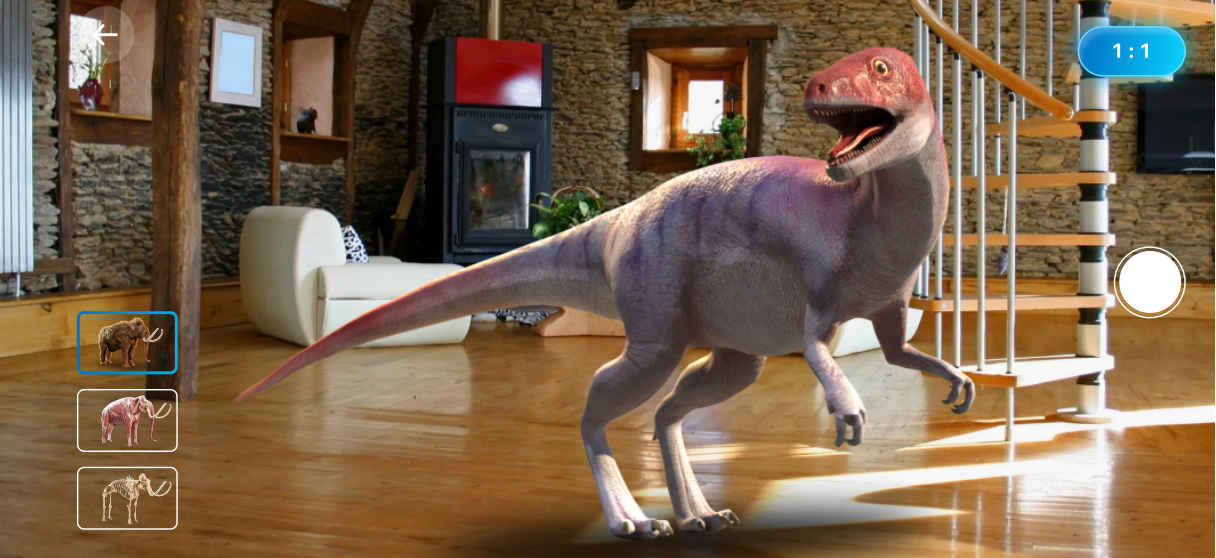
 AR - MODE
 GALLERY
 HISTORY OF DISCOVERIES

