


Orthacanthus

Name meaning:
Straight spine
Period of life:
323–272 million years ago
Period:
Carboniferous period
Habitat:
Freshwater environment
Taxonomy:
Sharks and rays
Countries:





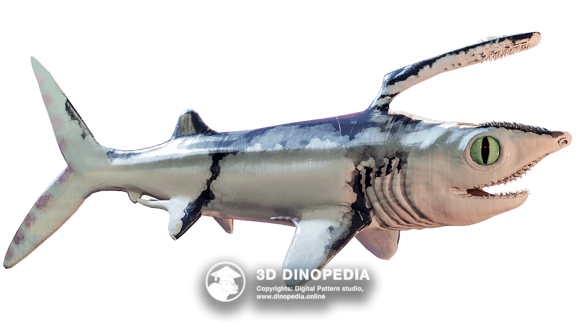 Falcatus


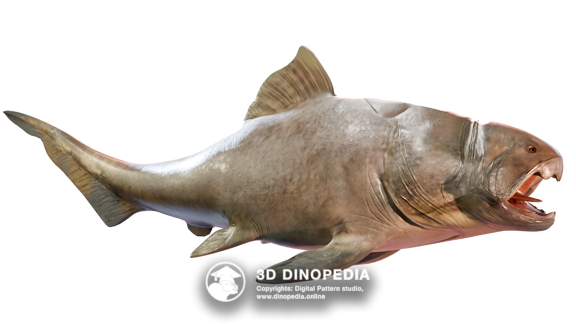
Dunkleosteus


What does the name mean: “straight spine” (from the Greek orthos — “straight” and akantha — “spine”).
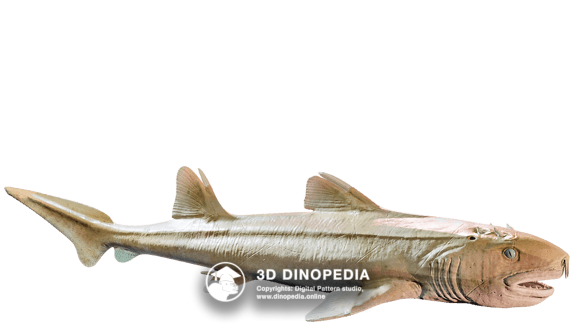
Orthacanthus was an extinct genus of freshwater sharks that inhabited the lakes and rivers of Europe and North America during the Late Carboniferous and Early Permian periods. These sharks were apex predators of their ecosystems and reached lengths of up to 3 meters. Their most distinctive feature was a long sharp spine located on the back directly behind the head.
Orthacanthus was a specialized predator with an appearance combining traits of sharks and eel-like fishes. Its body was long and streamlined, allowing efficient swimming. A powerful tail provided high speed and maneuverability, enabling it to pursue prey effectively. The head was relatively small, with a pointed snout and large eyes that likely provided good vision. The jaws were armed with sharp serrated teeth adapted for gripping and tearing prey. The structure of the teeth clearly indicates a predatory lifestyle.
One of the key anatomical features of Orthacanthus was the long sharp spine on its back, positioned behind the head. It could reach considerable size and probably served a defensive function, while also being used in behavioral interactions. Orthacanthus possessed two dorsal fins extending along most of the body and a single anal fin, which provided stability and maneuverability while swimming. The skin was covered with small scales that reduced water resistance.
Analysis of stomach contents shows that these sharks fed on a wide variety of prey, including fish, amphibians, and small reptiles. Evidence of cannibalism has also been discovered — adult individuals may occasionally have preyed upon juveniles of their own species.
Orthacanthus occupied an important role in the freshwater ecosystems of the Carboniferous and Permian periods. As an apex predator, it regulated the populations of other organisms and strongly influenced the structure of food chains.
Discussions
Start the first one!
 Start a discussion
Other animals







 INTERESTING FACTS
 PUZZLES
 HOME
HOME
 3D MODEL "SKIN"
 3D MODEL "MUSCLES"
 3D MODEL "SKELETON"
 VISION
 NEIGHBORS
 VOICE ACTING
 AR - MODE
 GALLERY
 HISTORY OF DISCOVERIES

