


Lystrosaurus

Name meaning:
Shovel reptile
Period of life:
255–248 million years ago
Period:
Permian period
Habitat:
Floodplains
Taxonomy:
Synapsids
Countries:





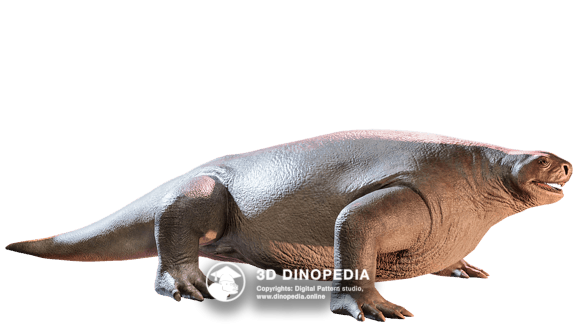 Cotylorhynchus


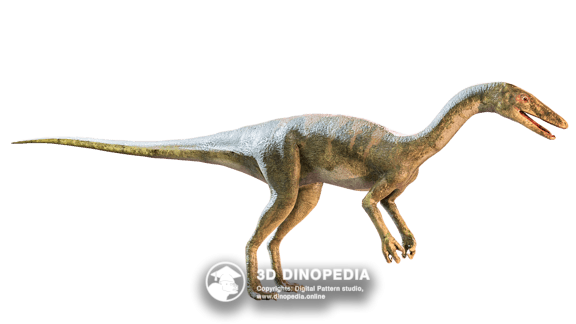
Coelophysis


What does the name mean: “shovel reptile” (from the Greek lystron — “shovel” and sauros — “reptile”).
Lystrosaurus was a herbivorous dicynodont that lived during the Late Permian and Early Triassic, around 255–248 million years ago. These animals belonged to the synapsids — distant relatives of mammals. They survived the Permian mass extinction, during which up to 96% of marine species and around 70% of terrestrial species disappeared.
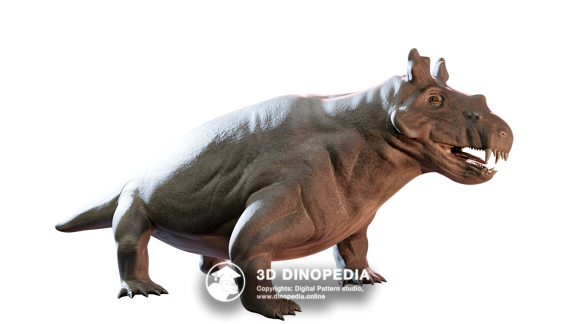
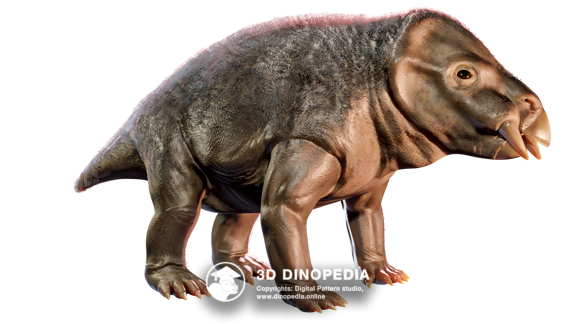
In appearance, Lystrosaurus combined features reminiscent of several modern animals. It possessed a tall, shortened skull with elevated nostrils and eyes. The body was barrel-shaped, supported by short and robust limbs. Its dentition consisted of only a single pair of upper tusks. The jaws were probably covered by a horny beak used for cutting vegetation.
Earlier hypotheses suggested that Lystrosaurus led a semi-aquatic lifestyle similar to that of modern hippopotamuses. However, later studies indicate that it inhabited predominantly arid environments. It is thought to have used its tusks to dig up food, including plant roots.
Lystrosaurus was extremely widespread: its fossils have been discovered across Eurasia, Africa, and Antarctica. During the Early Triassic, it made up as much as 95% of terrestrial vertebrates in southern Pangaea, making it one of the most dominant animal groups of its time.
The remarkable success of Lystrosaurus is linked to its ability to adapt to extreme environmental conditions. It could survive in atmospheres with reduced oxygen levels and elevated carbon dioxide concentrations, characteristic of the Early Triassic world. Scientists also propose that it may have undergone seasonal reductions in activity similar to hibernation in order to survive unfavorable periods.
Lystrosaurus is considered an important example of ecosystem recovery after mass extinction events. Its abundance and wide distribution reflect the processes of adaptation and subsequent diversification of terrestrial vertebrates during the Early Triassic.
Discussions
Start the first one!
 Start a discussion
Other animals






 INTERESTING FACTS
 PUZZLES
 HOME
HOME
 3D MODEL "SKIN"
 3D MODEL "MUSCLES"
 3D MODEL "SKELETON"
 VISION
 NEIGHBORS
 VOICE ACTING
 AR - MODE
 GALLERY
 HISTORY OF DISCOVERIES

