


Hipparion

Name meaning:
Little horse
Period of life:
10-5 million years ago
Period:
Neogene period
Habitat:
Floodplains
Taxonomy:
Mammals
Countries:





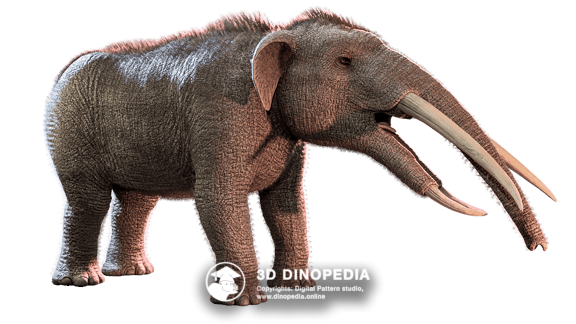 Gomphotherium


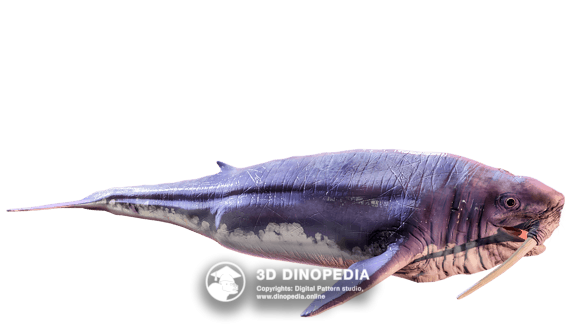
Odobenocetops


What does the name mean: The name Hipparion comes from the Greek ἱππάριον (hippárion) — “little horse,” a diminutive form of ἵππος (híppos) — “horse.”
Hipparion was a genus of three-toed perissodactyls widely distributed across Eurasia and Africa during the Miocene (approximately 10–5 million years ago). These animals belonged to the horse lineage but differed from modern horses in several anatomical features.
In size, Hipparion species were comparable to modern donkeys or small zebras: shoulder height reached about 1.4 m, and body mass ranged from approximately 135–170 kg depending on the species. Their build was relatively slender, and the back was slightly sloping.
A characteristic feature of Hipparion was its three-toed limbs. The main weight was borne by the central toe with a hoof, while the lateral toes were reduced and generally did not participate in support, though they may have played an auxiliary role on soft ground. The skull was elongated and possessed a characteristic depression in front of the eye sockets. The teeth had high crowns and a complex enamel structure, indicating adaptation for processing abrasive vegetation.
The internal anatomy of Hipparion generally resembled that of other perissodactyls: a single-chambered stomach and an elongated intestine adapted for digesting plant material. Features of the limbs and vertebral column indicate adaptation for sustained locomotion, although exact speed capabilities remain uncertain.
Hipparion mainly inhabited open and semi-open landscapes widespread during the Miocene, including savanna-like ecosystems.
The study of Hipparion is important for reconstructing horse evolution and understanding ecosystem changes during the Neogene.
Discussions
Start the first one!
 Start a discussion
Other animals






 INTERESTING FACTS
 PUZZLES
 HOME
HOME
 3D MODEL "SKIN"
 3D MODEL "MUSCLES"
 3D MODEL "SKELETON"
 VISION
 NEIGHBORS
 VOICE ACTING
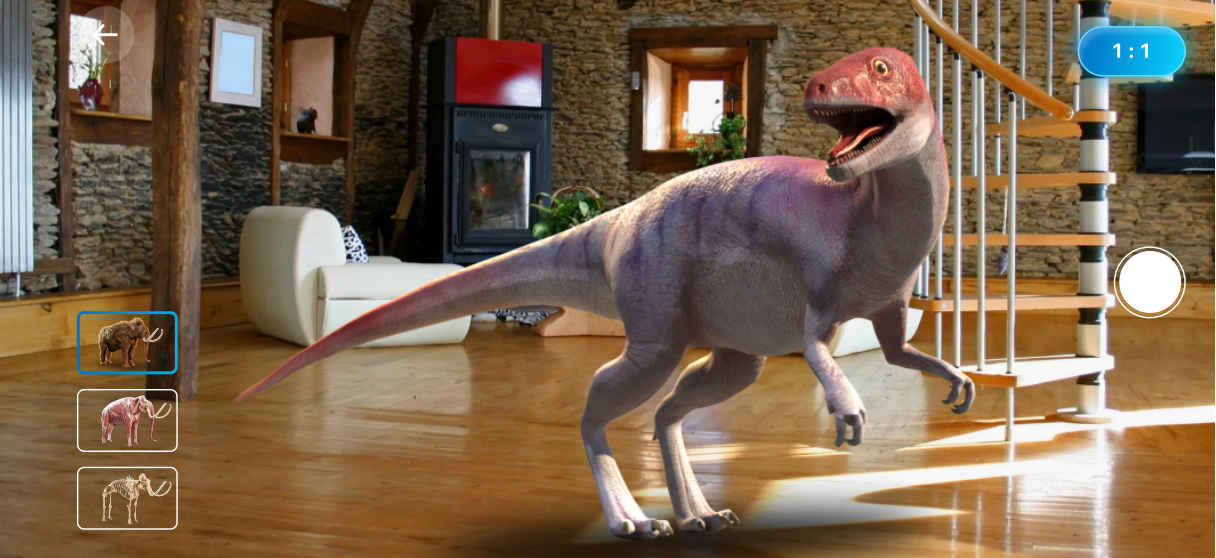
 AR - MODE
 GALLERY
 HISTORY OF DISCOVERIES

