


Kimmerobatis

Name meaning:
Name comes from the formation “Kimmeridge Clay”
Period of life:
150 million years ago
Period:
Jurassic period
Habitat:
Marine environment
Taxonomy:
Sharks and rays
Countries:



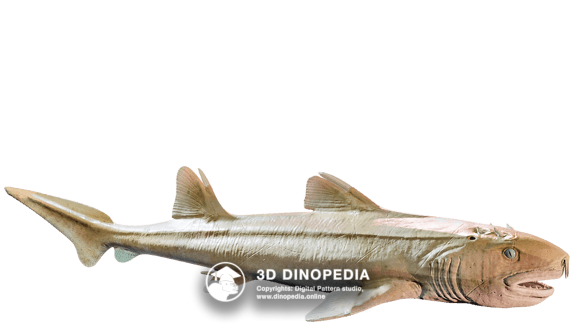 Hybodus


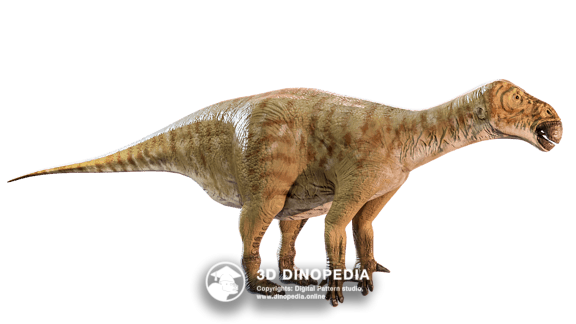
Iguanodon


What does the name mean: The name Kimmerobatis comes from the geological formation “Kimmeridge Clay”, where the remains were discovered, and the Ancient Greek word batis (“ray”).
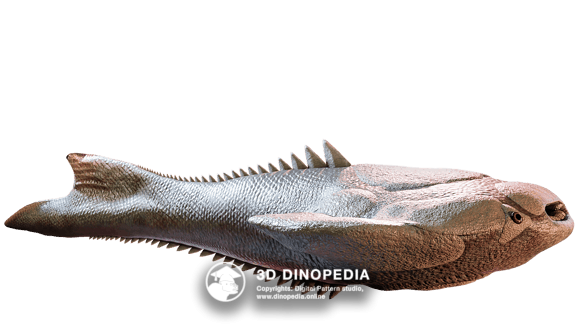
Kimmerobatis etchesi was an extinct ray that lived during the Late Jurassic, about 150 million years ago. Its fossils were discovered in southern England, near Kimmeridge, where a warm shallow sea existed at that time.
In overall appearance, Kimmerobatis etchesi resembled modern rays. Its body was flattened, and the broad pectoral fins were fused to the head, forming the characteristic disc shape. This body form allowed it to rest on the seafloor and camouflage effectively. The tail was long and slender, while the gill slits were located on the underside of the body.
The skeleton of Kimmerobatis etchesi consisted of cartilage, but its teeth were strongly mineralised and therefore are often preserved as fossils. Based on their shape, it is assumed that it fed on crustaceans and other invertebrates, crushing their hard coverings.
Of particular interest is the combination of primitive and more advanced features in the anatomy of Kimmerobatis etchesi. It retained traits characteristic of early rays, while lacking some structures — such as fin spines — found in other forms. This combination of features is important for reconstructing the evolution of rays.
Kimmerobatis etchesi was a bottom-dwelling predator that occupied a specific ecological niche in Jurassic marine ecosystems, helping regulate populations of benthic invertebrates.
Fossils of Kimmerobatis etchesi are relatively rare and of considerable scientific importance. They allow researchers to reconstruct not only the dentition, but also body structure, lifestyle, and evolutionary relationships with modern rays.
Discussions
Start the first one!
 Start a discussion
Other animals




 INTERESTING FACTS
 PUZZLES
 HOME
HOME
 3D MODEL "SKIN"
 3D MODEL "MUSCLES"
 3D MODEL "SKELETON"
 VISION
 NEIGHBORS
 VOICE ACTING
 AR - MODE
 GALLERY
 HISTORY OF DISCOVERIES

