


Ceratogaulus

Name meaning:
Horned gopher
Period of life:
16–5 million years ago
Period:
Neogene period
Habitat:
Savannas and plains
Taxonomy:
Mammals
Countries:



 Gomphotherium


Odobenocetops


What does the name mean: The name Ceratogaulus is derived from the Greek cerato- (“horn”) and -gaulus, an element used in the names of members of the family Mylagaulidae.
During the Late Miocene and Early Pliocene (approximately 16–5 million years ago), representatives of the genus Ceratogaulus inhabited North America. These animals lived in grasslands and open woodlands and were stout burrowing rodents with an unusual skull structure.
The name Ceratogaulus is associated with the most distinctive feature of these animals — the presence of horns. With a body length of about 30 cm, they were not true ground squirrels but belonged to the extinct family Mylagaulidae, a specialized group of burrowing rodents related to mountain beavers. Their massive body, powerful forelimbs, and large claws indicate adaptation to a subterranean lifestyle.
A characteristic feature of Ceratogaulus was the pair of bony projections located on the nasal bones. These structures, relatively large in comparison with body size, were positioned on the front part of the skull. Available evidence suggests that they may have been present in individuals of both sexes.
Based on the structure of the skull and dentition, Ceratogaulus is interpreted as primarily herbivorous. The powerful forelimbs were used for digging burrows and probably also for obtaining food. Features of the skull, including relatively small eye sockets, indicate comparatively poor vision. Smell, touch, and hearing likely played more important sensory roles.
Ceratogaulus is important for understanding the diversity of Neogene ecosystems and the evolution of mammals. Study of its remains helps reconstruct ancient environments and evaluate the evolutionary origins of unusual morphological traits such as the development of horns in burrowing rodents. Current interpretations suggest that these structures served mainly a defensive function rather than being used for digging.
Discussions
Start the first one!
 Start a discussion
Other animals



 INTERESTING FACTS
 PUZZLES
 HOME
HOME
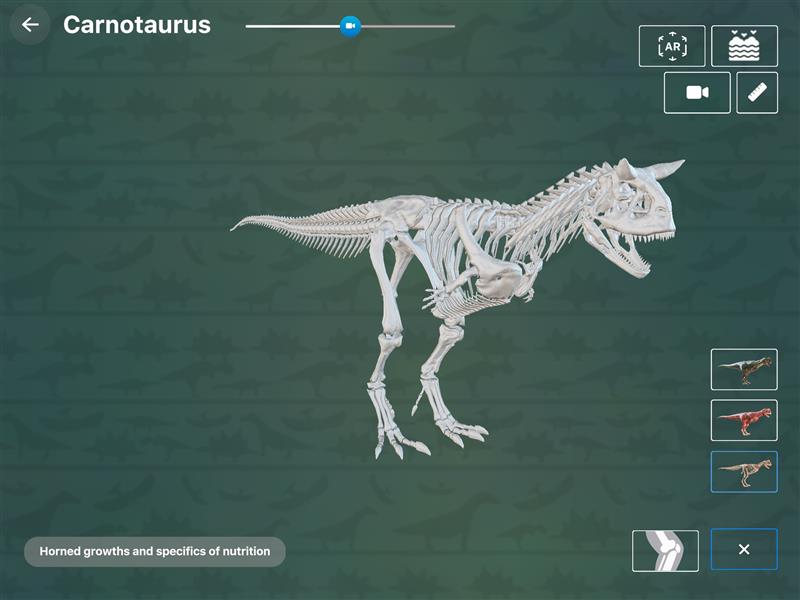
 3D MODEL "SKIN"
 3D MODEL "MUSCLES"
 3D MODEL "SKELETON"
 VISION
 NEIGHBORS
 VOICE ACTING
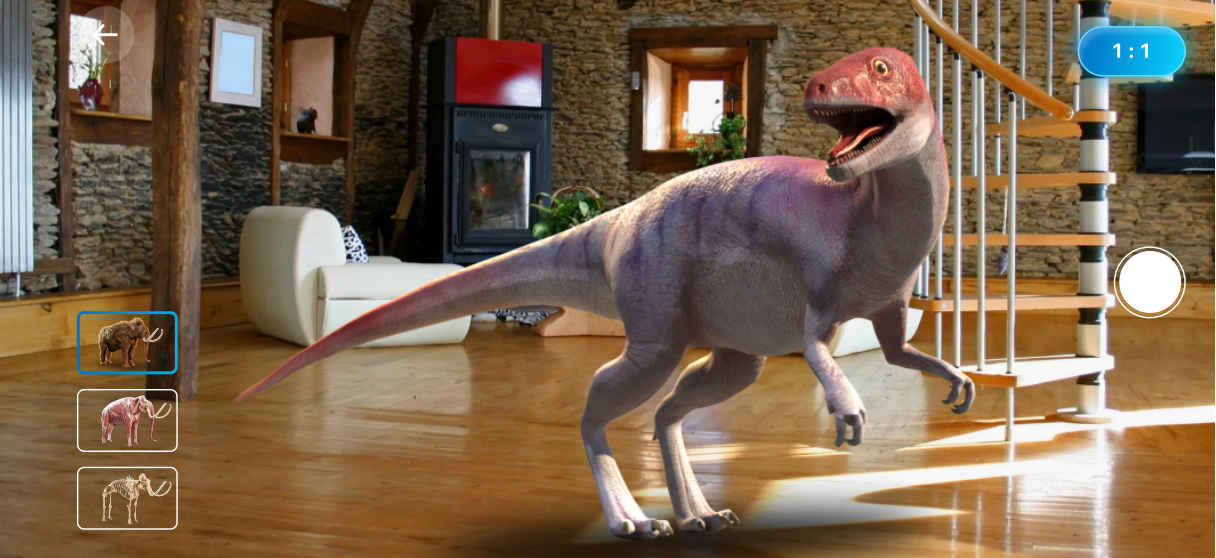
 AR - MODE
 GALLERY
 HISTORY OF DISCOVERIES

