


Cave lion
Name meaning:
Cave lion
Period of life:
0,3–0,01 million years ago
Period:
Quaternary period
Habitat:
Steppes
Taxonomy:
Mammals
Countries:





 Hydrodamalis gigas


Haikouichthys


What does the name mean: Both the common and scientific names mean “cave lion”.
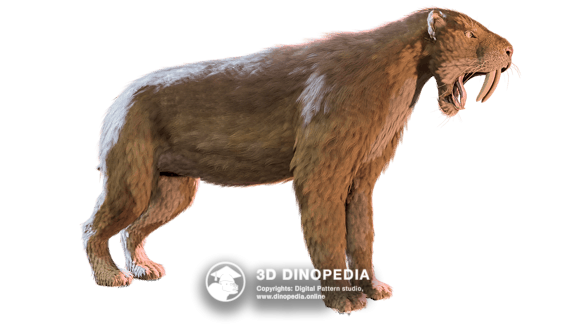
The cave lion (Panthera spelaea) was a large Pleistocene predator whose remains have been discovered across Europe and Siberia. It inhabited Eurasia during the Middle and Late Pleistocene (approximately 300,000 to 10,000 years ago), within the Quaternary Period.
The cave lion was somewhat larger than the modern African lion (Panthera leo) — approximately 5–10% larger. Shoulder height reached about 1.2 m, and body length up to 2.1 m excluding the tail. The body was covered with thick fur that provided protection against cold climates. According to paleolithic art, the mane in males was probably weakly developed or absent. The coloration was likely uniform — light brown or yellowish — with a well-developed underfur.
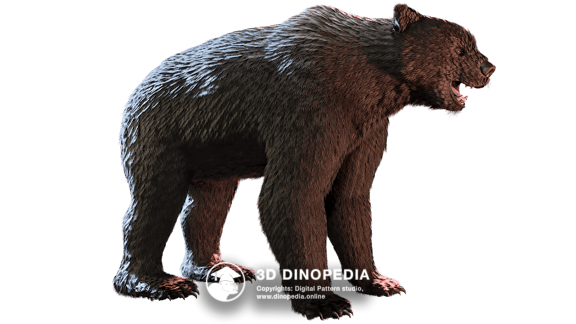
Cave lions inhabited a variety of landscapes, from cold steppes to periglacial zones. Their remains have even been found in subpolar regions. Like modern members of the genus, they occupied the top levels of food chains. Their diet mainly consisted of large ungulates: wild horses (Equus), deer (Cervidae), bison (Bison), and antelopes. There is also evidence suggesting possible attacks on cave bears (Ursus spelaeus), based on tooth marks found on bear bones.
It is thought that cave lions may have had a social lifestyle similar to that of modern lions, forming groups for hunting and territorial defense. This interpretation is supported by accumulations of bones from multiple individuals as well as cave paintings interpreted as scenes of cooperative hunting.
Discussions
Start the first one!
 Start a discussion
Other animals



 INTERESTING FACTS
 PUZZLES
 HOME
HOME
 3D MODEL "SKIN"
 3D MODEL "MUSCLES"
 3D MODEL "SKELETON"
 VISION
 NEIGHBORS
 VOICE ACTING
 AR - MODE
 GALLERY
 HISTORY OF DISCOVERIES

