


Эндрюсарх

Значение имени:
Правитель Эндрюса
Период жизни:
48-46 млн лет назад
Период:
Палеогеновый период
Среда обитания:
Озера и болота
Систематика:
Млекопитающие
Страны:




 Бахадазавр


Дарвиний


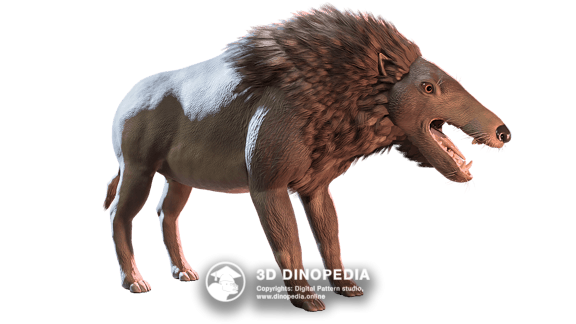
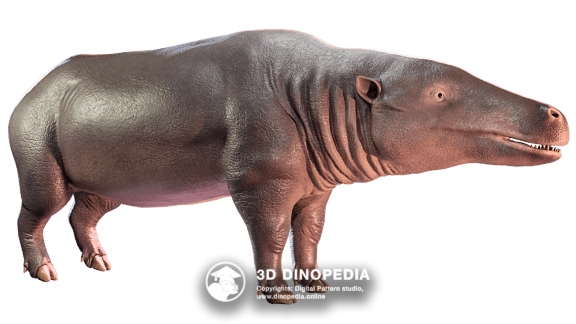
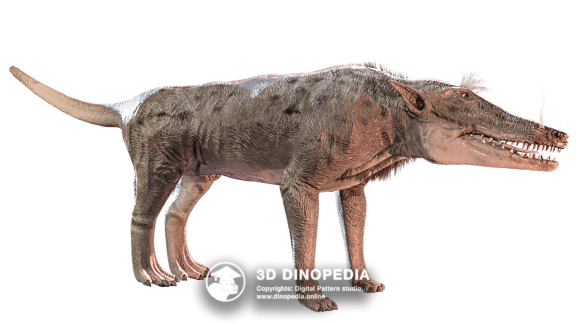
Andrewsarchus is one of the most enigmatic predatory mammals in Earth’s history. This giant inhabited what is now Mongolia, China, and Central Asia about 48–38 million years ago, during the middle to late Eocene—a time when the modern world was only beginning to take shape.
The story of its discovery holds a special place in paleontology. In 1923, an expedition led by the famed explorer and paleontologist Roy Chapman Andrews uncovered a massive skull in the Irdin Manha Formation of Mongolia. In recognition of the expedition’s leader, the animal was named Andrewsarchus mongoliensis—literally «Andrews’ ruling beast».
Its size is striking. Total body length, including an approximately 1.5-meter tail, is estimated at 3.7 to 4.5 meters. The skull alone measured nearly one meter in length—about 83 centimeters long and 56 centimeters wide—making it one of the largest skulls known among terrestrial mammalian predators. The brain, however, was relatively small, suggesting behavior driven more by instinct and physical power than by complex cognition. Body mass estimates approach one metric ton.
The massive canines and incisors, along with molars bearing sharp cutting edges, indicate a broad dietary range. Andrewsarchus was likely omnivorous with a strong carnivorous tendency: it may have scavenged carcasses, preyed upon weakened or young animals, and supplemented its diet with plant matter when necessary.
Some researchers have proposed a semi-aquatic lifestyle, drawing comparisons to modern hippopotamuses. The elongated skull has been likened to that of a crocodile, and its powerful jaws may have been capable of crushing turtle shells. Phylogenetically, Andrewsarchus appears related to early artiodactyls and is considered close to the lineage that eventually gave rise to whales—mammals that began on land before fully adapting to marine life.
Thus, Andrewsarchus was not merely a giant predator but an evolutionary landmark—an animal standing near the boundary between terrestrial and aquatic worlds. Its power, ecological flexibility, and mysterious biology make it one of the most formidable and fascinating mammals of the Eocene: a true sovereign of ancient Asian plains and coastal lowlands.
Обсуждения
Начните первое!
 Начать обсуждение
Другие животные






 ИНТЕРЕСНЫЕ ФАКТЫ
 ПАЗЛЫ
ПАЗЛЫ
 ДОМ
ДОМ
 3D МОДЕЛЬ "КОЖА"
 3D МОДЕЛЬ "МЫШЦЫ"
 3D МОДЕЛЬ "СКЕЛЕТ"
 ЗРЕНИЕ
 СОСЕДИ
 АКТЕРСКАЯ ОЗВУЧКА
 AR - РЕЖИМ
 ГАЛЕРЕЯ
 ИСТОРИЯ ОТКРЫТИЙ

